"He sprang from the cabin window as he said this, upon the ice raft which lay close to the vessel. He was soon borne away by he waves and lost in darkness and distance." pg 211
Wait...that's it? Victor dies of mental and physical exhaustion and the monster gets all sad and commits suicide? Is Mary Shelley insane? What other question could I possibly ask? Talk about putting all your eggs in one basket at the end. Poor Robert. If we imagine ourselves in his position for a moment, some guy just happens to show up while you're off trekking in no-man's-land, tells you a ridonkulous tale, dies, then a crazy thing shows up and tells you he will commit suicide because he doesn't have anyone to torment anymore. I'd say he got the short end of the stick. He didn't even get to do magnet-y things like he came for. I guess he'll have to take comfort in the fact that someone else will figure it out, so the world won't stay completely ignorant. Shucks.
Also, this is what my voice did when I was asking those rhetorical questions.

Thursday, April 21, 2011

Step Off My Teepee
"My father tried to awaken in me the feelings of affection. He talked of Geneva, which I should soon visit, of Elizabeth and Ernest; but these words only drew deep groans from me. Sometimes, indeed, I felt a wish for happiness and thought with melancholy delight of my beloved cousin or longed, with a devouring maladie du pays, to see once more the blue lake and rapid Rhone, that had been so dear to me in early childhood; but my general state of feeling was a torpor in which a prison was as welcome a residence as the divinest scene in nature; and these fits were seldom interrupted but by paroxysms of anguish and despair." pg 174
There were just some things in this quote that stuck out to me mostly because I don't know what they mean or what they are. So it's time to learn!
maladie du pays - homesickness
Found from this forum post!
So I know where the Rhine is, but where in the blazes is the Rhone?

There were just some things in this quote that stuck out to me mostly because I don't know what they mean or what they are. So it's time to learn!
maladie du pays - homesickness
Found from this forum post!
So I know where the Rhine is, but where in the blazes is the Rhone?

Right there!
And finally
paroxysm - any sudden, violent outburst; a fit of violent action or emotion.... HA!
Ramen Noodles: The Breakfast, Lunch, and Dinner of Champions
"Liberty, however, had been a useless gift to me, had I not, as I awakened to reason, at the same time awakened to revenge." pg 189

So I'm not exactly sure if Victor is a hero or antihero. As illustrated by the quote, his motivation is revenge. Additionally, his motivation for making the creature was an unhealthy obsession of succeeding. He faints and is ill constantly. Definitely not heroic; however, he does attempt to save those he loves. He embarks on a dangerous trek across wastelands to hunt down his creation and he's very strong-willed when deciding never to create another being even at the risk of a life of perpetual misery. That seems pretty heroic to me. You say "potato," I say "Why did you say potato? Weirdo." HA!

Weren't expecting that, were ya?
Dressing Like an 80 Year Old Lady Since 1993.
"...by the glimmer of the half-extinguished light, I saw the dull yellow eye of the creature open; it breathed hard, and a convulsive motion agitated its limbs." pg 56
Okay, so the quote isn't from the second half of the book, but this is kind of an abstract juxtaposition so I needed a more general quote. Don't judge me...rude. Baaaasically, I noticed that it becomes more clear in the second half the juxtaposition of life and death. Frankenstein gave life to the monster. The monster then takes life away. For something has joyous as creating life, this was an experiment gone wrong that only succeeded in extinguishing it. Life-death-juxtaposition. It's deep, okay?

Okay, so the quote isn't from the second half of the book, but this is kind of an abstract juxtaposition so I needed a more general quote. Don't judge me...rude. Baaaasically, I noticed that it becomes more clear in the second half the juxtaposition of life and death. Frankenstein gave life to the monster. The monster then takes life away. For something has joyous as creating life, this was an experiment gone wrong that only succeeded in extinguishing it. Life-death-juxtaposition. It's deep, okay?

HA!
I may be a raving lunatic, but my hair looks fabulous!
"Clerval! Beloved friend! Even now it delights me to record your words and to dwell on the praise of which you are so eminently deserving." pg 149
"She left me, and I continued some time walking up and down the passages of the house and inspecting every corner that might afford a retreat to my adversary. But I discovered no trace of him and was beginning to conjecture that some fortunate chance had intervened to prevent the execution of his menaces when suddenly I heard a shrill and dreadful scream." pg 186
So suspense is exactly what Frankenstein doesn't do. Operating within a frame story, it is very difficult to create suspense because the reader knows that whatever peril the protagonist is in, he'll make it out safely, more or less, or he wouldn't be narrating. Additionally, Mary Shelley really did write the book (HA!) for this genre because, especially leading up to Elizabeth's murder, I felt like I was watching one of those really predictable thriller/horror movies where you talk to the screen at the characters telling them that they're incredibly stupid for wanting to check the closet. Sure enough someone pops out and makes you jump. Well that's kind of what happened with Elizabeth. Victor leaves her alone to go check for the monster. Yeah, capital idea. So, that's how suspense is killed, strangled like the monster does his victims. Metaphor? Oh yes.

"She left me, and I continued some time walking up and down the passages of the house and inspecting every corner that might afford a retreat to my adversary. But I discovered no trace of him and was beginning to conjecture that some fortunate chance had intervened to prevent the execution of his menaces when suddenly I heard a shrill and dreadful scream." pg 186
So suspense is exactly what Frankenstein doesn't do. Operating within a frame story, it is very difficult to create suspense because the reader knows that whatever peril the protagonist is in, he'll make it out safely, more or less, or he wouldn't be narrating. Additionally, Mary Shelley really did write the book (HA!) for this genre because, especially leading up to Elizabeth's murder, I felt like I was watching one of those really predictable thriller/horror movies where you talk to the screen at the characters telling them that they're incredibly stupid for wanting to check the closet. Sure enough someone pops out and makes you jump. Well that's kind of what happened with Elizabeth. Victor leaves her alone to go check for the monster. Yeah, capital idea. So, that's how suspense is killed, strangled like the monster does his victims. Metaphor? Oh yes.
You're right Frankie, it's just a book.
Thursday, April 14, 2011
Side Effects May Include Death!
"On examining my dwelling, I found that one of the windows of the cottage had formerly occupied a part of it, but the panes had been filled up with wood. In one of these was a small and almost imperceptible chink through which the eye could just penetrate." pg 103
Creeper! CREEEEPER! Creeepercreepercreeeeeper!!!!
"My thoughts now became more active, and I longed to discover the motives and feelings of these lovely creatures; I was inquisitive to know why Felix appeared so miserable and Agatha so sad. I thought (foolish wretch!) that it might be in my power to restore happiness to these deserving people." pg 109
Uh-oh, I feel something TRAGIC coming! I'm not quite sure why the monster has taken such an interest in this family. It's nice what he's doing for them. I guess it characterizes him as an inherently nice person with feelings too. Then he's probably gonna get rejected 'cuz they all gon' be like "oh nooo, it's so ugly pa!" And then the monster is going to get its feelings hurt. Which makes it kill a little boy... The half way point had to be right in the middle of the frame frame story!

Creeper! CREEEEPER! Creeepercreepercreeeeeper!!!!
"My thoughts now became more active, and I longed to discover the motives and feelings of these lovely creatures; I was inquisitive to know why Felix appeared so miserable and Agatha so sad. I thought (foolish wretch!) that it might be in my power to restore happiness to these deserving people." pg 109
Uh-oh, I feel something TRAGIC coming! I'm not quite sure why the monster has taken such an interest in this family. It's nice what he's doing for them. I guess it characterizes him as an inherently nice person with feelings too. Then he's probably gonna get rejected 'cuz they all gon' be like "oh nooo, it's so ugly pa!" And then the monster is going to get its feelings hurt. Which makes it kill a little boy... The half way point had to be right in the middle of the frame frame story!

When you're out in the club and you see a fly girl, do the creep.
Chicken Dinner! I left the head on 'cause I love you.
"A flash of lightning illuminated the object and discovered its shape plainly to me; its gigantic stature, and the deformity of its aspect, more hideous than belongs to humanity, instantly informed me that it was the wretch, the filthy demon to whom I had given life. What did he there? Could he be (I shuddered at the conception) the murderer of my brother? No sooner did that idea cross my imagination than I became convinced of its truth; my teeth chattered, and I was forced to lean against a tree for support." pg. 73
Okay, what I want to know is how you're so sure that it was your monster that you created. Sure he shows up in a flash of lightning all ominously, but does that prove his guilt? I think Justine is guiltier than the monster. We never even found out if the monster actually killed him in this half of the book anyway. And why would he? What motivation would he have to randomly kill a person, save the fact that his creator shunned him. All he wanted was to be loooved! I blame Victor.

Okay, what I want to know is how you're so sure that it was your monster that you created. Sure he shows up in a flash of lightning all ominously, but does that prove his guilt? I think Justine is guiltier than the monster. We never even found out if the monster actually killed him in this half of the book anyway. And why would he? What motivation would he have to randomly kill a person, save the fact that his creator shunned him. All he wanted was to be loooved! I blame Victor.

But everyone knows my logic is never flawed!
It's lonely being an oatmeal vending machine.
"From this day natural philosophy, and particularly chemistry, in the most comprehensive sense of the term, became nearly my sole occupation. I read with ardor those works, so full of genius and discrimination, which modern inquirers have written on these subjects. I attended the lectures and cultivated the acquaintance of the men of science of the university, and I found even in M. Krempe a great deal of sound sense and real information , combined, it is true, with a repulsive physiognomy and manners, but not on that account the less valuable." pg 49
Oh and that's just the beginning folks! That whole chapter, Chapter 4 as it is so eloquently titled, is an entire chapter devoted to his motivation in making the monster. This is the whole lead-in to the creation of the monster chapter which leads to many subsequent freak-outs. But as a whole, this chapter shows Frankenstein's drive for knowledge and understanding. Additionally, it shows his great intelligence and capability for advancement which makes it more believable that he could make a persony-thing. Oddly enough, this motivation is replaced immediately after with lethargy and invalidity. Then a desire to want to destroy the monster comes after that. (Sunday comes afterwaaaarrrrddsss.) Who knows what Frankenstein wants to do after chapter 12?! Let's let our good friend Rebecca tell us more about this sequence stuff.
Oh and that's just the beginning folks! That whole chapter, Chapter 4 as it is so eloquently titled, is an entire chapter devoted to his motivation in making the monster. This is the whole lead-in to the creation of the monster chapter which leads to many subsequent freak-outs. But as a whole, this chapter shows Frankenstein's drive for knowledge and understanding. Additionally, it shows his great intelligence and capability for advancement which makes it more believable that he could make a persony-thing. Oddly enough, this motivation is replaced immediately after with lethargy and invalidity. Then a desire to want to destroy the monster comes after that. (Sunday comes afterwaaaarrrrddsss.) Who knows what Frankenstein wants to do after chapter 12?! Let's let our good friend Rebecca tell us more about this sequence stuff.
My secret super power is eyebrow grooming.
"From the tortures of my own heart, I turned to contemplate the deep and voiceless grief of my Elizabeth. This also was my doing! And my father's woe, and the desolation of that late so smiling home - all was the work of my thrice-accursed hands! Ye weep, unhappy ones, but these are not your last tears! Again shall you raise the funeral wail, and the sound of your lamentations shall again and again be heard!" pg 85
And it goes on like that for a while. In fact, I wouldn't have chosen stream of consciousness if I didn't feel like Victor was freaking out about something every other page. Because this is a frame story with Victor as its narrator, we get the insight of how he felt coming straight from the character, rather than the view of an omnipotent narrator or a third party narration. It seems to me the author's main tool for characterization through the work thus far. Stream of consciousness has shown Frankenstein's cowardice, intelligence, and tenderness all through "Whine, whine, whine, monster, whine, whine." And because his thoughts are so golly gee chaotic, it lends a kind of suspenseful tone as well. Will this crazy monster I've made that I try not to think about, but totally do, come back to haunt me in a more significant way? I can only wonder...as I wander....

And it goes on like that for a while. In fact, I wouldn't have chosen stream of consciousness if I didn't feel like Victor was freaking out about something every other page. Because this is a frame story with Victor as its narrator, we get the insight of how he felt coming straight from the character, rather than the view of an omnipotent narrator or a third party narration. It seems to me the author's main tool for characterization through the work thus far. Stream of consciousness has shown Frankenstein's cowardice, intelligence, and tenderness all through "Whine, whine, whine, monster, whine, whine." And because his thoughts are so golly gee chaotic, it lends a kind of suspenseful tone as well. Will this crazy monster I've made that I try not to think about, but totally do, come back to haunt me in a more significant way? I can only wonder...as I wander....

Would you like some cheese with that whine?
No pine, no apple...just a whole lotta PINEAPPLE.
"But I consented to listen, and seating myself by the fire which my odious companion had lighted, he thus began his tale." pg 97
As if it couldn't get any better, the monster starts another frame story within a frame story. It reminds me a lot of Inception. Every new frame story is like another dream within a dream. I'm half expecting a train to come crashing through and annihilate the monster and Frankenstein. Or at the very least, Leonardo DiCaprio's wife showing up with a gun to blow their brains out. But as far as the function of frame stories, it definitely keeps my interest more. As a reader I'm constantly playing catch-up which (sometimes unwillingly) forces me to devote more effort to keeping everything straight. It's definitely a way nifty concept and it gets my stamp of approval as an effective literary technique.
Also, if you've seen Inception before, this will be tres funny.
As if it couldn't get any better, the monster starts another frame story within a frame story. It reminds me a lot of Inception. Every new frame story is like another dream within a dream. I'm half expecting a train to come crashing through and annihilate the monster and Frankenstein. Or at the very least, Leonardo DiCaprio's wife showing up with a gun to blow their brains out. But as far as the function of frame stories, it definitely keeps my interest more. As a reader I'm constantly playing catch-up which (sometimes unwillingly) forces me to devote more effort to keeping everything straight. It's definitely a way nifty concept and it gets my stamp of approval as an effective literary technique.
Also, if you've seen Inception before, this will be tres funny.
Wednesday, April 6, 2011
I'm a couple sandwiches short of a pile of sandwiches!
The Blog That Deals With The End Blog
So I learned a few things from this book, Costello-jan. Afghanistan is messed-up beyond fixing probably. Human vice always makes for a compelling read. Child rape makes me feel icky and want to take a shower. I can see why it's on the work of literary merit list though. It had a highly relatable, yet thoroughly disdainable protagonist in Amir. You can feel good about yourself twice over! It made several banned book lists too which is a prereq for literary merit. I think just about all the other book choices were on a banned book list at one point too. But in the end, Amir felt better about himself and could move on with his guilt to focus his efforts on a new project, Sohrab. Yay America! Boo Taliban! Yay kabobs and naan!

So I learned a few things from this book, Costello-jan. Afghanistan is messed-up beyond fixing probably. Human vice always makes for a compelling read. Child rape makes me feel icky and want to take a shower. I can see why it's on the work of literary merit list though. It had a highly relatable, yet thoroughly disdainable protagonist in Amir. You can feel good about yourself twice over! It made several banned book lists too which is a prereq for literary merit. I think just about all the other book choices were on a banned book list at one point too. But in the end, Amir felt better about himself and could move on with his guilt to focus his efforts on a new project, Sohrab. Yay America! Boo Taliban! Yay kabobs and naan!

Relevant picture....what?
Who are you calling a HoHo?!?
"'You could have told me,' Farid said later. The two of us were lying next to each other on the straw mats Wahid's wife had spread for us.
'Told you what?'
'Why you'e come to Afghanistan.' His voice had lost the rough edge I'd heard in it since the moment I had met him.
'You didn't ask.'
'You should have told me.'
'You didn't ask.'" pg 239
This whole exchange just reminds me of some cliched bonding moment that one would see in a movie. It even uses the trite "You didn't ask (how virtuous I really was)" comeback. It's like they're twelve. Or maybe they're in Rush Hour and Farid is Chris Tucker and Amir is Jackie Chan. Now that I think about it, their whole Kabul-Peshawar-Islamabad ordeal seems kind of like a gorier misadventure of Rush Hour. I never thought I'd ever compare this book to that movie, but I think it just happened. Maybe Allah will strike me down because of it, but I think I'll take my chances.

'Told you what?'
'Why you'e come to Afghanistan.' His voice had lost the rough edge I'd heard in it since the moment I had met him.
'You didn't ask.'
'You should have told me.'
'You didn't ask.'" pg 239
This whole exchange just reminds me of some cliched bonding moment that one would see in a movie. It even uses the trite "You didn't ask (how virtuous I really was)" comeback. It's like they're twelve. Or maybe they're in Rush Hour and Farid is Chris Tucker and Amir is Jackie Chan. Now that I think about it, their whole Kabul-Peshawar-Islamabad ordeal seems kind of like a gorier misadventure of Rush Hour. I never thought I'd ever compare this book to that movie, but I think it just happened. Maybe Allah will strike me down because of it, but I think I'll take my chances.
I'm utilizing a religious motif today and would like to present to you
Our Lady of Perpetual Diet Coke.
You wanted a Diet Coke? You didn't ask, my child.
Tacoh No!
"'For you a thousand times over,' I heard myself say." pg 371
D'aww! What a cute ending! Amir has finally learned the meaning of selfless! My mimicking the mantra of Hassan to Hassan's son, it kind of gives the story a full circle effect, which is sooo much better than a cliffha.... Hassan was very foiley to Amir because he gave himself fully and completely out of partly servitude, but I believe mostly out of love for his friend. Now Amir has forgiven himself and loves Sohrab much like a son and is willing to devote himself completely to him like Hassan did to Amir. It's the ciiiiiirccle of liiiiiiiiiiiife, and it moves us allllllll! Another motif that isn't really given by direct quotes is child rape. So that's pretty cool. Hassan really just had a bad luck streak in his family for that, I guess.

D'aww! What a cute ending! Amir has finally learned the meaning of selfless! My mimicking the mantra of Hassan to Hassan's son, it kind of gives the story a full circle effect, which is sooo much better than a cliffha.... Hassan was very foiley to Amir because he gave himself fully and completely out of partly servitude, but I believe mostly out of love for his friend. Now Amir has forgiven himself and loves Sohrab much like a son and is willing to devote himself completely to him like Hassan did to Amir. It's the ciiiiiirccle of liiiiiiiiiiiife, and it moves us allllllll! Another motif that isn't really given by direct quotes is child rape. So that's pretty cool. Hassan really just had a bad luck streak in his family for that, I guess.
It's Poprah.
This just made me roflcopter.
When you're on a golden sea, you don't need no memory.
"This isn't you, Amir, part of me said. You're gutless. It's how you're made. And that's not such a bad thing because your saving grace is that you've never lied to yourself about it. Not about that. Nothing wrong with cowardice as long as it comes with prudence. but when a coward stops remembering who he is...God help him." pg 275
This very statement pretty much characterized Amir for the entire story thus far. The funny thing is that he's telling himself this. This character flaw drives most of the story in the beginning. Then the cowardice of dealing with guilt drives the post-America "let's go on an Afghan safari for orphans" drives Amir to do what he does in good 'ol Kabul. Such a charming place. Anywho, he get's crazy healed shortly after and it's cool then and his motivation shifts from caring for Sohrab out of a debt he feels he owes to Hassan to a general love and concern for his half-nephew who is equally messed-up but through no fault of his own. Also, the Weezer lyrics are a shameless attempt for brownie points.

This very statement pretty much characterized Amir for the entire story thus far. The funny thing is that he's telling himself this. This character flaw drives most of the story in the beginning. Then the cowardice of dealing with guilt drives the post-America "let's go on an Afghan safari for orphans" drives Amir to do what he does in good 'ol Kabul. Such a charming place. Anywho, he get's crazy healed shortly after and it's cool then and his motivation shifts from caring for Sohrab out of a debt he feels he owes to Hassan to a general love and concern for his half-nephew who is equally messed-up but through no fault of his own. Also, the Weezer lyrics are a shameless attempt for brownie points.
I used one of her steps ;)
Giraffes have a neck like whaaaaaat?
"My body was broken - just how badly I wouldn't find out until later - but I felt healed. Healed at last. I laughed." pg 289
There are quite a few climaxes in this book, but this seems to be the biggun'. Sure there's another after this with the whole "this is the most depressing suicide attempt ever" dealie, but I take it this story is more focused on Amir trying to atone for his utter douchebagginess to Hassan during his childhood. This bizarre catharsis as a result of the hooliwad (word my mom uses) being punched out him was necessary in Amir's eyes to feel healed. I personally think Assef and Amir are insane. To want to feel physical pain to atone for your emotional torment would definitely rack up some extra sessions on the psychology bill. I also found it odd that Amir laughed like Assef when he had his little epiphany in jail. And just for the record, getting a kidney stone kicked out of you is not a sign from AllahGod. In other news, Hosseini made this super cool 'cuz teh cLiMAXX ez pARiDoxIcAL!

There are quite a few climaxes in this book, but this seems to be the biggun'. Sure there's another after this with the whole "this is the most depressing suicide attempt ever" dealie, but I take it this story is more focused on Amir trying to atone for his utter douchebagginess to Hassan during his childhood. This bizarre catharsis as a result of the hooliwad (word my mom uses) being punched out him was necessary in Amir's eyes to feel healed. I personally think Assef and Amir are insane. To want to feel physical pain to atone for your emotional torment would definitely rack up some extra sessions on the psychology bill. I also found it odd that Amir laughed like Assef when he had his little epiphany in jail. And just for the record, getting a kidney stone kicked out of you is not a sign from AllahGod. In other news, Hosseini made this super cool 'cuz teh cLiMAXX ez pARiDoxIcAL!
*sigh*
Tuesday, March 22, 2011
Too dumb to chew gum.
"That's Henry Kissinger." pg. 21
There really isn't much depth to this quote. I just kind of picked it to see if I could make a random post about it. So far I've got three sentences. I had to look up Henry Kissinger on Wikipedia because I'm a sheltered dumb American. I'd heard the name before. But I'm glad he did a lot of super-duper things for America. And it was nice of him to visit Afghanistan. I guess it may have been a kind of foreshadowing with the whole Russian situation that was to come, so that's cool.

There really isn't much depth to this quote. I just kind of picked it to see if I could make a random post about it. So far I've got three sentences. I had to look up Henry Kissinger on Wikipedia because I'm a sheltered dumb American. I'd heard the name before. But I'm glad he did a lot of super-duper things for America. And it was nice of him to visit Afghanistan. I guess it may have been a kind of foreshadowing with the whole Russian situation that was to come, so that's cool.
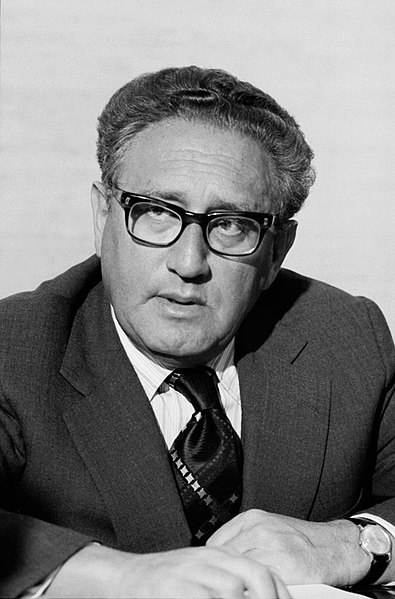
Hey Costello, he stole your glasses!
Food and Wet. I call it soup.
"Years later, I learned an English word for the creature that Assef was, a word for which a good Farsi equivalent does not exist: 'sociopath.'" pg. 38
Hmm, usually I hear it the other way around. Like oh, there just isn't a good English equivalent for this word. We've even adopted words like zeitgeist and schadenfreude and doppelganger from German because in English we have to use entire phrases like "the general thoughts and feelings of the time", "taking pleasure in one's pain", and "someone who roams the world who looks exactly like you." I really think schadenfreude should have it's own English equivalent. You can make it up. Submit it to Websters. Either way, I'm glad to learn English has one-upped Farsi. Maybe because they didn't have the word for it, that's why nobody did anything about Assef when he ran around raping children...Bazinga!
On a fun note, here's a whole song about schadenfreude from Avenue Q. It's very questionable as far as language and themes go, but hey, I'm reading a book about child rape for class, so we can't get too nitpicky can we?
Hmm, usually I hear it the other way around. Like oh, there just isn't a good English equivalent for this word. We've even adopted words like zeitgeist and schadenfreude and doppelganger from German because in English we have to use entire phrases like "the general thoughts and feelings of the time", "taking pleasure in one's pain", and "someone who roams the world who looks exactly like you." I really think schadenfreude should have it's own English equivalent. You can make it up. Submit it to Websters. Either way, I'm glad to learn English has one-upped Farsi. Maybe because they didn't have the word for it, that's why nobody did anything about Assef when he ran around raping children...Bazinga!
On a fun note, here's a whole song about schadenfreude from Avenue Q. It's very questionable as far as language and themes go, but hey, I'm reading a book about child rape for class, so we can't get too nitpicky can we?
Everything needs to smell like lemons, OK?
"You greeted the guy across the aisle, you invited him for a bite of potato bolani or a little quabuli, and you chatted. You offered tassali, condolences, for the death of a parent, congratulated the birth of children, and shook your head mournfully when the conversation turned to Afghanistan and the Roussis - which it inevitably did." pg. 138
This quote, to me, goes beyond mere dialect or style. It's a crucial description of an important routine of, it seems many, Afghan immigrants. What really spices this and the rest of the story up is the constant bombardment of Farsi words. Who knew I'd ever learn how to say thank you in Farsi? The constant repetition of familiar words such as thank you, naan, bread, and others make it seem more real, colloquial, but even deeper. It immerses the reader in Afghanistan. The Afghan way of life is very important to Amir and his people, so the local color of Afghans in Kabul and Afghans in California is quite prevalent. It makes me want to eat Mediterranean food.

This quote, to me, goes beyond mere dialect or style. It's a crucial description of an important routine of, it seems many, Afghan immigrants. What really spices this and the rest of the story up is the constant bombardment of Farsi words. Who knew I'd ever learn how to say thank you in Farsi? The constant repetition of familiar words such as thank you, naan, bread, and others make it seem more real, colloquial, but even deeper. It immerses the reader in Afghanistan. The Afghan way of life is very important to Amir and his people, so the local color of Afghans in Kabul and Afghans in California is quite prevalent. It makes me want to eat Mediterranean food.

Get me some naan up in hurr.
Cheese is just a lump of old milk.
"And I could almost feel the emptiness in Soraya's womb, like it was a living, breathing, thing. It had seeped into our marriage, that emptiness, into our laughs, and into our lovemaking. And late at night, in the darkness of our room, I'd feel it rising from Soraya and settling between us. Sleeping between us. Like a newborn child." pg. 189
I don't know why we can't be cool people and call this personification. Or is this personification/anthropomorphism at all? Sure it's giving human characteristics to "emptiness," but it's not an inanimate object or animal like the definition says. Am I bound to the strict definition like a Constitutionalist is to every word of the, uh, Constitution? Is there a totally different word for this altogether that I'm just missing? What IS tempo? But claps for Hosseini on taking something intangible and making it into something creepy like a newborn child just popping up outta nowhere. It really fits this metaphorical specter that has manifested itself in Amir and Soraya's life. Poor things, no chillins for them or their Afghan pride.

I don't know why we can't be cool people and call this personification. Or is this personification/anthropomorphism at all? Sure it's giving human characteristics to "emptiness," but it's not an inanimate object or animal like the definition says. Am I bound to the strict definition like a Constitutionalist is to every word of the, uh, Constitution? Is there a totally different word for this altogether that I'm just missing? What IS tempo? But claps for Hosseini on taking something intangible and making it into something creepy like a newborn child just popping up outta nowhere. It really fits this metaphorical specter that has manifested itself in Amir and Soraya's life. Poor things, no chillins for them or their Afghan pride.

C'est la vie, eh Amir?
Congratulations! You're America's Next Top Babushka!
"I knew I was being cruel, like when i'd taunt him if he didn't know some big word. But there was something fascinating - albeit in a sick way - about teasing Hassan. Kind of like when we used to play insect torture. Except now, he was the ant and I was holding the magnifying glass." pg. 54
Oh Amir, you're such a selfish little prick, you! I don't understand why Amir would ever want to mess with Hassan. I don't think Amir knows why he does it either. It especially makes him super antiheroic when Hassan is so foily (does that mean he's shiny? =D). Hassan's total submission to Amir's will and his portrayal as someone pure and innocent is right out the antithesis of an antihero which helps to draw a starker contrast between the two characters. Yet what complexifies it is their relationship as practically brothers. They spend most of their time together, playing, talking, doing kid things. Yet social customs, like Amir's being a Pashtun and Hassan's being a Hazara, and Amir's whacked-out personality make this relationship tragic.

Oh Amir, you're such a selfish little prick, you! I don't understand why Amir would ever want to mess with Hassan. I don't think Amir knows why he does it either. It especially makes him super antiheroic when Hassan is so foily (does that mean he's shiny? =D). Hassan's total submission to Amir's will and his portrayal as someone pure and innocent is right out the antithesis of an antihero which helps to draw a starker contrast between the two characters. Yet what complexifies it is their relationship as practically brothers. They spend most of their time together, playing, talking, doing kid things. Yet social customs, like Amir's being a Pashtun and Hassan's being a Hazara, and Amir's whacked-out personality make this relationship tragic.
It's Hassan. He's a foil character. Nyuk nyuk nyuk nyuk nyuk.
Subscribe to:
Posts (Atom)