Showing posts with label juxtaposition. Show all posts

Thursday, April 21, 2011

Dressing Like an 80 Year Old Lady Since 1993.

"...by the glimmer of the half-extinguished light, I saw the dull yellow eye of the creature open; it breathed hard, and a convulsive motion agitated its limbs." pg 56

Okay, so the quote isn't from the second half of the book, but this is kind of an abstract juxtaposition so I needed a more general quote. Don't judge me...rude. Baaaasically, I noticed that it becomes more clear in the second half the juxtaposition of life and death. Frankenstein gave life to the monster. The monster then takes life away. For something has joyous as creating life, this was an experiment gone wrong that only succeeded in extinguishing it. Life-death-juxtaposition. It's deep, okay?

HA!

Thursday, September 9, 2010

Ling-Ling! You walked right by Crazy Nails and No Say Hi Me!

"The Convergence of the Twain" by Thomas Hardy

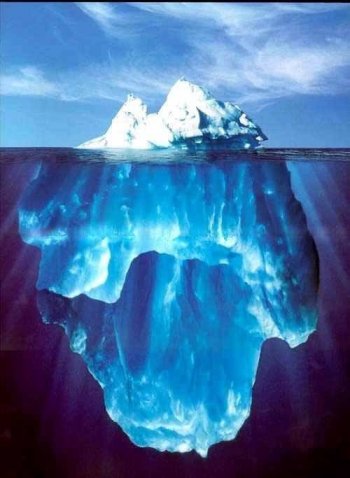
This poem, through the vessel of The Titanic, attempts to portray the destruction of human vanity. In the first few stanzas, the ship is described as an opulent entity with "Jewels in joy designed/To ravish the sensuous mind." Yet now the boat, this embodiment of human achievement which was "unsinkable" not sits at the bottom of the ocean with "grotesque, slimed, dumb, indifferent" sea-worms and "Dim moon-eyed fishes" which have no capacity for appreciating its beauty. In the final stanzas, the juxtaposition of the iceberg and the ship come into play. The iceberg and the ship "grow" over time together, at the same pace, each being the other's enemy. Then a greater being, ("Immanent Will, Spinner of the Years") wishing to stick it to humanity's "vaingloriousness" (which is the best word in the poem) "Said 'Now!'" and the two collided. Obviously the iceberg won.
Hmm, who would win in a fight, a boat or an iceberg? I'm just wracked with indecision.

Thursday, August 12, 2010

Dix dollars déclare Matthew Blandford vais essayer de traduire cette.

"The stump of his right leg was twitching. There were slivers of bone, and the blood came in quick spurts like water from a pump." pg. 62.

EwwewwewwewwEWWW! Now that that's out of my system, I can honestly say I found the next two chapters muy interesante. What jumped out at me first was the juxtaposition of the titles, "Enemies" and "Friends." Then, hey wouldn't you know, the two guys that grew to be enemies are now friends. War, I feel, can be titanically traumatic, even out of combat as these chapters prove. Though these two men hated each other and even sent one into a kind of hysteria, this trauma and dealing with it together as a team greatly bonds people beyond the protective emotional walls that one erects around oneself.

I'm also constantly wondering if what I'm reading comes from an actual experience of the author, or if it's one of his made-up-so-you-can-feel-what-war-is-like stories. I'm thinking this one was the latter, but I've been wrong befo...wait, that's absurd, I'm never wrong.
Heehee, you see what I did there?

Oh, Canada!

"I remember Norman Bowker and Henry Dobbins playing checkers every evening before dark. It was a ritual for them. They would dig a foxhole and get the board out and play long, silent games as the sky went from pink to purple. The rest of us would sometimes stop by to watch. There was something restful about it, something orderly and reassuring. There were red checkers and black checkers. The playing field was laid out in a strict grid, no tunnels or mountains or jungles. You knew where you stood. You knew the score. The pieces were out on the board, the enemy was visible, you could watch the tactics unfolding into larger strategies. There was a winner and a loser. There were rules." pg. 31

Hey, lookey here kids, it's some juxtaposition! Naturally, in the second chapter, the author would want to make some kind of comparison with which to equate war, something not widely experienced by the random person on the street. But, oh golly gee willickers, by comparing war to checkers he shows us what war is not. Checkers is first something just about everyone can relate to, so it's easy to know where O'Brien is coming from when he describes the game. Yet when implies how checkers is unlike the Vietnam war, it leaves the imagination to put the reader in his shoes rather than limiting himself to a finite analogy.

"The average age in our platoon, I'd guess, was nineteen or twenty..." pg. 35

Up until this point I had assumed most of the guys were around their mid-twenties. It's only more concerning now that I'll be reading about people around my age. I don't appreciate this sentiment.   -.- <--- emoticon!