Showing posts with label imagery. Show all posts

Thursday, September 30, 2010

...then when I pulled into my parking spot at Kroger and got out, I heard all these bullets whizzing by! And they were all like PEW! PEW PEW PEW! Then they started shelling and everything was all BLOWING UP! So I ducked and rolled under the Prius next to me, soldier-crawled into the store and bought some juice and crackers.

"The Apparition" by John Donne

And I was so hoping to get that E.D. poem on the page before! But it's okay, Costello, you made up for it with this John Donne selection. Speaking of this selection, John Donne was doing some hardcore hypothetical creepin'. Baaaasically, if his current lady nags him too much, he'll "die" (literal or metaphorical? who knows, it's poetry!) and then when she thinks she's finally rid of him with her new hypothetical man, the speaker will hypothetically haunt her while she and her new hypothetical man sleep in their hypothetical bed. Not only was the speaker hypothetically creepin' on the woman, but the poem was ("hypothetically?") creepin' on the reader with it's eerie tone. Such imagery as "thy sick taper will begin to wink," and "then shall my ghost come to thy bed" gives a very haunted house theme to it all. The speaker feels he will be quite effective in his hypothetical creepin' mission that he will leave the woman "Bathed in a cold quicksilver sweat" and "[lying] a verier ghost than I." Ooh, gotcha there Ms. Naggypants!
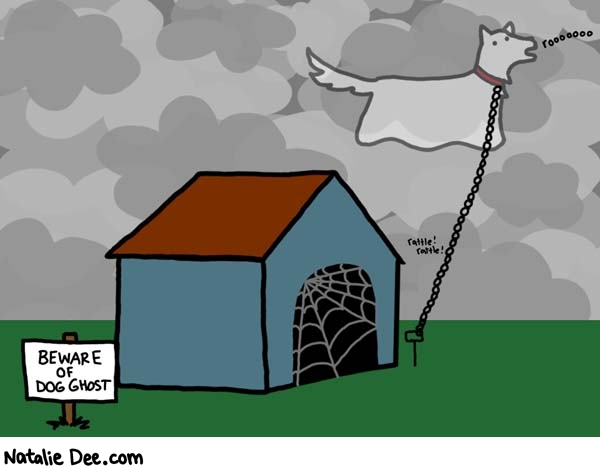
Ooh look! It must be their hypothetical pet!

Thursday, September 16, 2010

The Big C Seemed Way Too Excited When Discussing This One...

"February" by Madge Atwood

The title (of the blog post) says it all. The gleam in Costello's eyes when discussing this...piece...was like two bright lighthouses shining in the night. I suppose it can be justified because the more we discussed the piece, the more I enjoyed it. In fact, it was one of my favorites for this unit because of its tone and familiar imagery. The coziness of staying in bed in a warm house during the cold, hard days of February provides an almost picturesque winter scene with the poet, scrawling in a journal about this time, then contemplating her cat that joins her up on the bed to "[tell] whether or not [she's] dead." Oh, that cat. With a more than vivid illustration, the speaker portrays the cat in a negative light during "February, month of despair...." and then compares humanity, making them no higher than animals, to the cat. ("It's all about sex and territory, which are what will finish us off in the long run.") Finally, after her tone of bitterness concerning love, sex, and procreation, she calls the cat (and people) to action so as not to be glum during the gray February days and make it something worthwhile.
Obviously the cat was a lolcat.

Thursday, September 9, 2010

Do all the women in the Bureau have to wear those really masculine shoes?

"London" by William Blake

I dunno 'bout you, but I was definitely getting a whole tone and mood are really important kind of vibe from this poem. Oh, you did too? Well, I equated William Blake's description of London with Sweeny Todd. Both give a very dark tone and mood, Sweeny Todd with both the story and the physical lighting and "London" with imagery of "black'ning Church[es], blood down Palace walls, marks of weakness...[and] woe." In addition, much like E.D.'s funeral poem, which is also on the darker side, sound was very prevalent. Many of the characters "cry" such as every man, every infant, and Chimney sweepers, in addition to others making their voices heard as well. This is also found in Sweeny Todd through singing. London's a rough place, it seems.


How could I not post a Sweeny Todd song? I feel it compliments the poem perfectly.

Ling-Ling! You walked right by Crazy Nails and No Say Hi Me!

"The Convergence of the Twain" by Thomas Hardy

This poem, through the vessel of The Titanic, attempts to portray the destruction of human vanity. In the first few stanzas, the ship is described as an opulent entity with "Jewels in joy designed/To ravish the sensuous mind." Yet now the boat, this embodiment of human achievement which was "unsinkable" not sits at the bottom of the ocean with "grotesque, slimed, dumb, indifferent" sea-worms and "Dim moon-eyed fishes" which have no capacity for appreciating its beauty. In the final stanzas, the juxtaposition of the iceberg and the ship come into play. The iceberg and the ship "grow" over time together, at the same pace, each being the other's enemy. Then a greater being, ("Immanent Will, Spinner of the Years") wishing to stick it to humanity's "vaingloriousness" (which is the best word in the poem) "Said 'Now!'" and the two collided. Obviously the iceberg won.
Hmm, who would win in a fight, a boat or an iceberg? I'm just wracked with indecision.

I'm just tryin' to meet you half way!

"I Felt a Funeral, in my Brain" by E.D.

From the details, we can correctly conclude the speaker is in a coffin at his own funeral due to the abundance of senses provided, especially sound. Many times sound was conveyed through imagery like "A Service, like a Drum-/Kept beating - beating -", "And then I heard them life a Box....", "As all the Heavens were a Bell,/And Being, but an Ear/And I, and Silence, some strange Race...." What one may expect to be in a poem full of imagery though, is blatantly missing. Sight is such a strong sense that it is often taken for granted and dulls our other senses due to our heavy reliance on it. Because of its absence, one may assume the speaker is in his own coffin at his own "funeral." Naturally the funeral is not literal because the speaker still has abundant senses
(much unlike a corpse), so it is also appropriate to interpret a figurative meaning for the funeral. I tend to agree with the "insanity" interpretation due to the almost exasperated and excluding tone. An interpretation about a struggle with drugs may seem appropriate in a modern application; however, because both insanity and drugs have an outstanding effect mentally, they can be easily interchanged. Both interpretations, I feel, fall into our beloved "cone zone"; yet, I do not feel the "loss of religion/faith" interpretation is quite as conical. A person chooses to have faith and believe in God. One would not write about one's own absence of religion in such a negative light of it being the cause of their spiritual death, because if they do not believe in God, they don't have to worry about a spiritual death in the first place.
Natural and delicious. Who knew?

Ling-Ling, you forgot your Bling-Bling.

"The Widow's Lament in Springtime" by William Carlos Williams

First, having a name like William Williams is either a sign of uniqueness, cruelty, or a mixture of both in his parents. A major theme of the poem is definitely the poignancy of springtime for the widow. As shown in the previous poem, "Spring," this season is usually a sign of happiness and rebirth, this can even be seen in the musical The Producers in the song "Springtime for Hitler" which recounts in Broadway fashion the joy of Hitler conquering Europe (If unfamiliar with this musical, I suggest introducing yourself.). So with the universality of equating spring and happiness, the poignancy comes when the widow no longer sees the beauty in it due to her great pain of losing her husband. She recounts many times the "masses of flowers" around her yet feeling nothing. Even the "new grass flame[d]" in previous years but now she is consumed by an oxymoronic "cold fire" of longing for her husband. Feeling all this super-duper sadness, though, she does want to leave her yard of sorrow ("Sorrow is my own yard....") to the meadow her son suggests. The son seems to be wanting her to move on ("Go look at those flowers for a while!"), yet the widow wants to "sink into the marsh near them" as a kind of way of dying to be with her long lost hubby.
How could you not like this? It's beautiful!

Sort of Crinkly.


"Spring" by Gerard Manley Hopkins puts me in a very "I want to plant a garden" mood. The first part is especially descriptive due to its sonnet form because it is indeed an Italian sonnet. This involves a beginning form of eight lines called the octave, which in this poem is a vastly descriptive image of spring. This includes images of "weeds...shoot[ing] long, lovely, and lush." (which puts me in the green mood...I should buy a Prius.) in addition to a "Thrush's eggs" and "racing lambs" which all seem to symbolize new life. Unlike the first Dickinson poem we read which was incorrectly interpreted as a garden scene, but is rather a sunset, the details aforementioned make "Spring" much like a garden, specifically the Garden of Eden, which is alluded to later in the poem. In fact, this later comes after a very important element of an Italian sonnet called the volta or "turn." By utilizing a different rhyme scheme, the volta signifies a change in the subject or an extrapolation on the beginning section. The generic garden image is expounded upon to carry the more important connotation of the Garden of Eden which allows for a smooth transition to the final stanza concerning Jesus and the thangs he do by saving innocence and shtuff.

Friday, August 13, 2010

Soy Muy Que Fabulosa

"The lake lay flat and silvery against the sun. Along the road the houses were all low-slung and split-level and modern, with big porches and picture windows facing the water. The lawns were spacious. On the lake side of the road, where real estate was most valuable, the houses were handsome and set out into the lake, and boats moored and covered with canvas, and neat gardens, and sometimes even gardeners, and stone patios with barbecue spits and grills, and wooden shingles saying who lived where." pg. 131

My first thought after reading the entire description of the town in "Speaking of Courage" was "O'Brien is so much better at imagery than Hemingway." And I think Hemingway hangs his hat on being descriptive and such. It really is easier though to blog about a book I didn't enjoy than a book I did. I could go on for quite some time about how TSAR should have never have been written to at the very least spare a few seniors some trouble over the summer. It is much more difficult to praise, I've found. There are only so many ways to say "I really liked this" or "I thought he did this well" without sounding redundant. Or at least to me they sound redundant. Either way, there's a connection between the two books we read. Give me points.

Friday, July 9, 2010

With a soda on the side? I'm Ron Burgundy?

IMAGERY, round 2


"It was hot, but the town had a cool, fresh, early-morning smell and it was pleasant sitting in the cafe. A breeze started to blow, and you could feel that the air came from the sea. There were pigeons out in the square, and the houses were a yellow, sun-baked color, and I did not want to leave the cafe." pg. 97


This stuck out to me due to the contrast when compared with the first excerpt of imagery I chose. This was a radical shift (well, about as radical as this book ever gets) from the dark, gloomy, and brooding Paris night scenes to a much more lively, fresher, sunnier setting. It seems also, that the setting stays much more "happy/carefree" while the characters roam about the Spanish countryside.


"We passed the bull-ring, high and white and concrete-looking in the sun, and then came into the big square by a side street and stopped in front of the Hotel Montoya." pg. 100


Hello, my name is Inigo Montoya. You killed my father. Prepare to die.


"Why I felt that impulse to devil him I do not know. Of course I do know. I was blind, unforgivingly jealous of what had happened to him. The fact that I took it as a matter of course did not alter that any. I certainly did hate him. I do not think I ever really hated him until he had that little spell of superiority at lunch - that and when he went through all that barbering. So I put the telegram in my pocket. The telegram came to me, anyway." pg. 105


No, tell me how you really feel. Another shift of this chapter is Jake's sudden hatred of his long-time friend, Robert, all because he for once had an air of superiority around him? Goodness.