Wednesday, November 3, 2010

Who needs an iPod when you've got boombox pants?

"A Rose for Emily" by William Faulkner

What are the advantages of first-person plural point of view in this story? What would be lost if it were told in first-person singular, by one of the townspeople, or in third-person limited point of view?

Please note, all questions asked are, in fact, questions. Second, the real advantage I see in using first-person plural is to be all fancy and artsy and "oh I wonder what will happen if I write something in an obscure point of view? Oh, I'll get the Nobel Prize!" Pretentious is what I see. What would be lost if it were told any other way would be some confusing elements and a Nobel Prize. The person might be cool because then you'd get into Emily's inner thoughts...yeah, I'd like to be there. Stream of Consciousness. Pretty sweet. Oh, and can we read a story that isn't incredibly sexual? I know we're all trying to pretend to be mature, but now it's just getting annoying. This has been your time with Kim Iverson....I mean...you know. =D


She talks about sexual things too....=/
Emoticons.

Texting your friends who aren't there is cooler than merely talking to the ones that are.

"Interpreter of Maladies" by Jhumpa Lahiri

So, when I first read Harry Potter and they mentioned the wizard hospital, St. Mungo's Hospital for Magical Maladies and Injuries, I thought it was surprisingly specific in that it only dealt with women because I somehow interpreted "maladies" as having to do with women. Probably something with the word "ladies" in it and kind of sounding like "m'ladies" aaand kind of looking like the word madame. It was then to my surprise that there were male patients there. Thank you, Harry Potter, for teaching me the definition of maladies before I read this short story lest I be utterly confused. Also, Mr. Kapasi was creepin' hardcore on Mrs. Das. That's pretty much what I got from this story. Mr. Kapasi is gross. That kid gets pwnd by some monkeys. Mrs. Das is depressed and ill content. Not that earth-shattering. Hmm.
No longer Peeps, or even Marshmallow Creeps.
I know christen these treats as Mr. Kapasi's.

If your pedantic, you'll love this title.

"How I Met My Husband" by Alice Munro

Discuss the effectiveness of the surprise ending. How does Carmichael differ from Chris Watters? Can it be argued that the surprise ending is also inevitable and appropriate?

First, something I'd like to address, is a little pet peeve o' mine. "Discuss the effectiveness of the surprise ending." is not a question. It is a misnomer to call this question a "question" when the first sentence is imperative. In addition, telling someone, rather abruptly and rudely mind you, to "discuss" as matter-of-factly as this textbook just did gets someone fired. Lucky for people in general, I'm not yet 30. So, it wants to discuss? Let's discuss! I think the surprise ending was effective in making the story be published in an AP Lit. book so whackjob professors can get just a little recognition by their peers and so their head inflates so that it no longer fits through doors. How about you? Oh wait, I can't discuss this because it's just ME! A discussion requires at least two people. If you want a discussion, please join me, otherwise, don't ever in your life ask me to "discuss" something, ESPECIALLY in a QUESTION because that's where actual QUESTIONS go.

Carmichael differs from Chris Watters in that he is not a perverted vagabond looking to corrupt girls much younger than him. It's the conservative husband who will love her that we've all been waiting for!

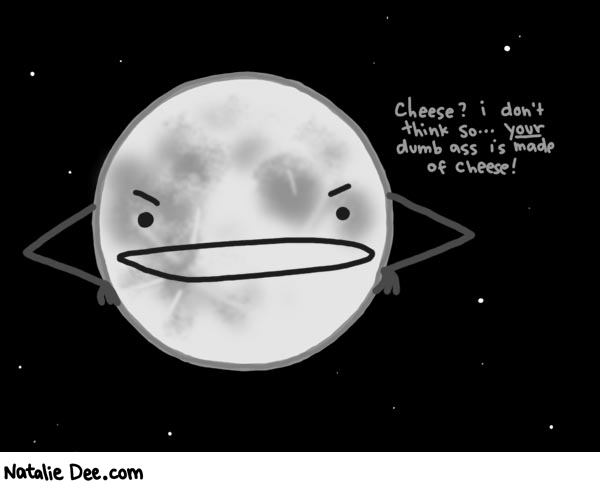
It can indeed be argued that the ending was inevitable and appropriate. It can also be argued that the moon is made of cheese and I am the Queen of Sheba. But if Edie did end up with crazy Chris, it wouldn't have been satisfying to the reader at all in that she ended up with a total creep who would probably rape her the second time 'round.

Thursday, October 14, 2010

Que lastima! Es una carta de dia espanol. Se dice que nos ama, pero tiene que salir nosotros ahora.

"Delight in Disorder" by Robert Herrick

Me reading the poem: "Grrr...stupid soft rhymes that don't make any sense."
Me after thinking about it: "Ohhhh! The soft rhymes are supposed to be clever and enhance the theme!"
Me typing the above two comments: "Herrick reminds me of herring. You're a fish, Rob. Robster the Lobster, that's what you are."

But to explain that whole thing, the soft rhymes means something because they're a kind of disorder that have been put there on purpose. Just as the little off doo-dads in the described fashionista's outfit, the structure of the poem creates some disorder. Robster needs something to do with his life if he sits around writing about disorderly fashion in which he secretly takes pleasure.
Robster would enjoy this.


Also...I don't take Spanish.

4 out of 5 dentists agree that 1 out of 5 dentists' opinions can't be bought.

"Lonely Hearts" by Wendy Cope

At first I thought I was looking at a poem inspired by Match.com or something and thought "Yes! Finally, something not from the days of old fogies and mothballs." Then it got all "newspaper or magazine" in the questions part of the book. I guess 1950s-90s era is better than the less attractive and uncoordinated cousin, 1850-90. However, what really makes this form is the form and the repetition. The villanelle is an appropriate form because each tercet (and the final quatrain) represents a different ad. Each ad has vastly different needs for a mate described; yet, they are similar in two respects. The first are the kind of people that are writing their Personal. A biker, a gay vegetarian, the bored executive looking for a possible bisexual woman (dare to dream, you), a single Jewish mother, someone who identifies themselves as a Libra, and an anonymous person. Each are some kind of radical, liberal kind of "outcast" of society with whom nobody wants to deal. They all find their way, though, into the "Villanelle Personals." The repetition of phrases that come with the general form of the poem also ties each personal to a common theme of constant searching and desperation to be rid of loneliness.

ready for senior pictures
Aaaand, let's add a penguin to the list of hopefuls, too.

Ain't nothin' funny 'bout no baked taters.

"Death, be not proud" by John Donne

The whole time I read this I just kept imagining this as a 14th-century version of a ghetto throwdown which totally dissed death for bein' on John Donne's turf. I now present, "Death, you be trippin'" by Christian Powers.

Death, you be trippin'

Death, you be trippin', even though some be
Givin'  you props, I ain't seein' it;
Ya thank ya all that
Butchu cain't even touch mah cornrows.
Dude ya even look a fool, lookin' all like ya make errbody sleepy
But dude, I don' even get up before noon; an' then you wanna make all uh us go tah beyad.
I don' thank so.
You be all up hangin' witcho posse,
But dude, cho posse don't even know me. They don' even know me!
Dude, I come across drugs that's better than yo sorry behind.
Why you be trippin' dawg?
Ima bust a cap in you.

                   
Word.

Guau, yo soy una abeja gigante.

"Do Not Go Gentle into That Good Night" by Dylan Thomas

Soooo, I guess this is a villanelle. At least that's what the book says in it's description the size of una abeja gigante. But what really stuck out to me were the paradoxes. For example, even in the title our first paradox reveals itself in the form of "good night." This may even be a form of euphemism for death while also being a paradox. Whoooaahh, mindsplode. Not to be mistaken for the humdrum farewell we so often give, this "good night" is used to give death its due poignancy for the various kinds of men (wise, good, wild, and grave) and their ironic deaths their sense of...irony. In addition the speaker seems to suggest that the night isn't good, especially with the phrase "Rage, rage against the dying of the light," the whole "not go[ing] gentle" into it.

it feels good to get things off your chest
Yeah, coming up with a good picture was kind o' hard for this one...so enjoy!